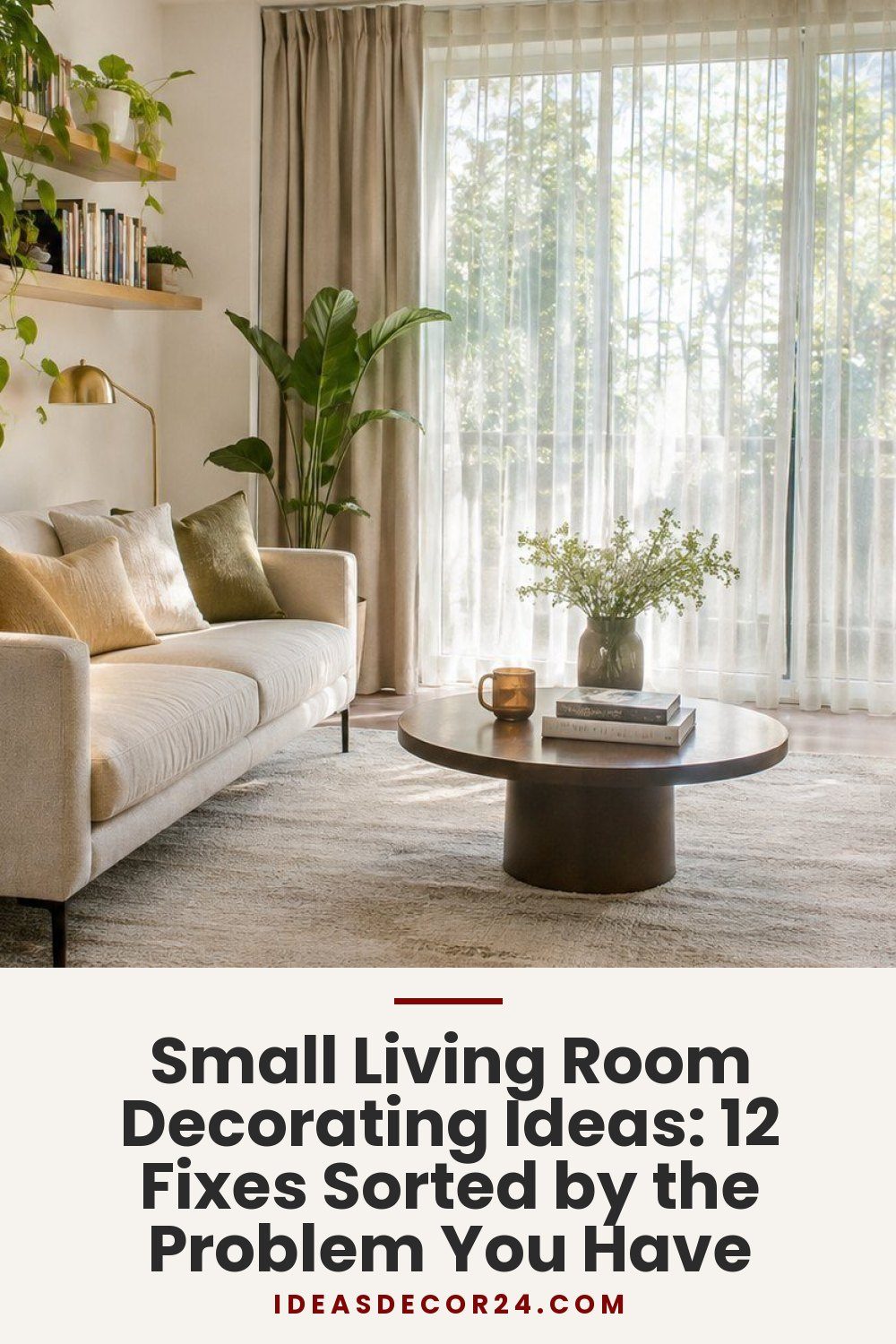
The best small living room decorating ideas solve the problem you actually have: too little light, a cramped layout, overflowing belongings, or a room doing two jobs. Start with the cheapest fix—return things that belong elsewhere—then plan the furniture before shopping. The steps below show how to decorate a small living room around clear routes, useful seating, and a rug that connects the pieces.

Plan the Layout First
How to plan a small living room layout, step by step


- Measure the room with a tape before you buy or move anything.
- Map out the rug area first, since it anchors the seating.
- Note where each door is and which way it swings.
- Mark the sofa and rug footprints with painter’s tape to see them at full size.
- Leave at least 18 inches (46 cm) of bare floor around the rug edges.
- Allow about 14–18 inches (36–46 cm) between the sofa and the coffee table.
Steps 1–3, 5 and 6 follow designer Cyrus Loloi’s rules in Lola Houlton, Homes & Gardens; the tape check is a simple way to test them.
Interior designer Nick Lewis’s video “How to Decorate Small Spaces” offers a visual companion to this plan. Watch how furniture choices and the way pieces relate affect openness, then use your measured floor outline to decide which ideas suit your own living room.
If It Feels Too Dark
Bounce the window view back into the room. Hang a mirror opposite a window to reflect the outdoor view into the living room. Laura Gaskill’s Houzz guide pairs the mirror with wallpaper behind it to add depth to a small room that feels boxed in. The reflected view creates the impression of another window. Laura Gaskill, Houzz

Replace daylight-blocking curtains with light layers. Layer voile in the window recess with a thicker blackout covering over it, as Ana Zuravliova recommends in Ideal Home. The sheer fabric admits daylight while the thicker layer provides a blackout option. Anna Jones separately recommends floor-length curtains to create the impression of height in a small living room. Sara Hesikova; contributions by Lisa Fazzani, Ideal Home
Light the corners as well as the ceiling. Use lamps and wall lights to wash light over different zones or a feature in the room. Designer Claudia Dorsch explains in Houzz that this creates depth and shadow. She also recommends LEDs in the cornice, adding another lighting layer rather than relying on a single ceiling light. Amanda Pollard, Houzz
If It Feels Too Narrow or Cramped
Trade bulky sofa arms for visible floor. Choose a sofa with slim arms and legs when bulky upholstery overwhelms a narrow room. Liz and Sarah at Lathams recommend those proportions in Ideal Home to maximize seating without overwhelming the space. Tara Rodrigues makes the separate point that furniture on legs reveals more floor, helping the room feel more open. Sara Hesikova, Ideal Home

Give the coffee table a reachable gap. Jennifer Jones tells Livingetc that 18 inches (46 cm) is the minimum space between a sofa and coffee table. The article allows the gap to drop to 15 inches (38 cm) in a small apartment. Lesley Myrick says round or oval tables can sit a little closer because their curved edges feel less obstructive. Olivia Wolfe, Livingetc
Connect the seating with a properly sized rug. Choose a rug large enough to ground the main seating pieces, as Artem Kropovinsky advises in Homes & Gardens. Lola Houlton, Homes & Gardens
If There Is Nowhere to Put Things
Lift the book collection onto wall shelves. Use wall-mounted shelving for books and display pieces that currently occupy a freestanding unit or overflow onto side tables. Designer Betsy Berry recommends vertical storage in Apartment Therapy’s small-space guide. Group books together and give everyday objects an accessible shelf. Fit the shelves to the available wall. Caroline Biggs, Apartment Therapy

Let the coffee table swallow the toys. Replace a plain coffee table with a storage ottoman when toys repeatedly spread across the seating area. Designer Frank Ponterio tells Architectural Digest that a large storage ottoman can hide a lot of building toys. Store this room’s toys inside, within reach of the rug. Christina Cush, Yelena Moroz Alpert, and River Davies, Architectural Digest
Return the things that belong elsewhere. Clear the living room before buying another cabinet. Professional organizer Melissa Gugni tells Homes & Gardens to return dishes to the kitchen and toys to the bedroom or playroom. Books left over from the toddler stage belong in the child’s room. Start by returning these misplaced belongings to the rooms where they are used. Chiana Dickson, Homes & Gardens
If the Room Has Two Jobs
Make a sofa-side dining spot. For a living room without a breakfast area, designer MA Allen suggests a coffee table around 25 inches (64 cm) high so it can serve meals while you sit on the sofa. This deliberately taller table suits a dining role; it changes how the seating group functions. Try the height with your sofa, and leave a landing spot for clearing plates after dinner. Caroline Biggs, Apartment Therapy

Give the work corner a desk of its own. Dedicate an underused living room corner to work instead of spreading papers across the seating area. Zoë Sessums’s Domino guide suggests equipping that spot with drawers, a proper chair, and access to documents to keep clutter contained. A slim console with a compact chair or stool can also serve as the desk. Zoë Sessums, Domino
Let the sofa become the guest bed. Choose a sleeper sofa when the living room also needs to accommodate overnight visitors. In Olivia Wolfe’s Livingetc guide, designer John O’Leary recommends sofa beds for smaller homes and multifunctional living spaces. Style the piece as part of the everyday seating, and look for a sturdy frame, a reliable conversion mechanism, and a supportive mattress if guests will sleep there regularly. Olivia Wolfe, Livingetc
More Small Living Rooms
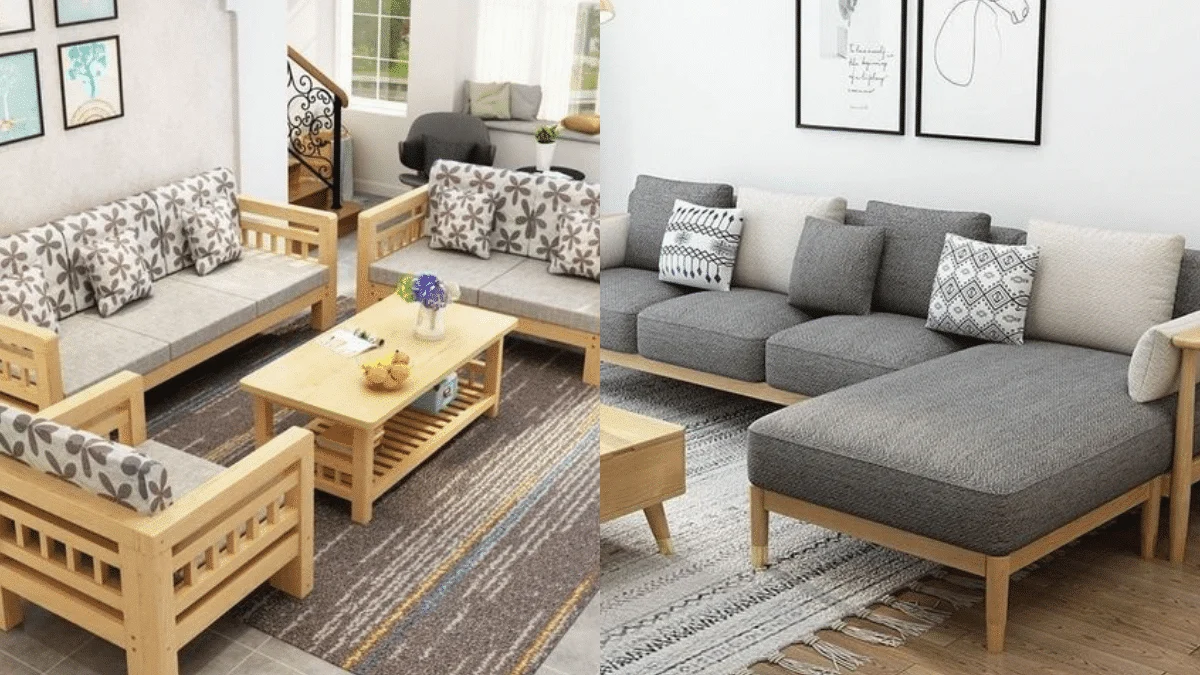
Browse these small living room decor arrangements for seating, wall displays, rugs, and shared dining spaces.


Add a personal finishing touch with painted wood decor or a rope wall hanging that brings texture to an available wall.