DIY Wall Decor with Rope or Wire

Want to make your wall look fancy without spending a lot? Rope and wire are great for this. They can turn a plain wall into something special with texture and shape.
This guide is for anyone in the U.S. who wants to decorate their home, apartment, or dorm room. It's perfect for beginners.
You'll learn how to plan, create, and hang your DIY wall decor easily.

Rope adds a cozy touch. It's soft and works well for modern boho, coastal, or farmhouse looks. Plus, you can use old cotton clothesline or macramé cord to save money.
Wire, on the other hand, is sleek and modern. It's great for clean designs, words, and small 3D shapes. You can find wire at craft stores and hardware shops, making it easy to get started.
We'll cover the basics first, then rope and wire projects. Finally, we'll wrap up with tips to pick your next DIY project.
DIY wall decorations with rope or wire
DIY wall decorations with rope or wire can change a room's feel quickly. Rope adds warmth and texture, while wire brings crisp detail. With some planning, your projects can look great without being too fussy.
Choosing Rope vs. Wire for Your Wall Art Style
Rope is perfect for boho, coastal, or farmhouse styles. Cotton macramé cord is soft and great for wall hangings. Cotton rope is sturdier for bold designs.
Jute or hemp rope has a rustic feel and works well with wood. But, it can shed when cut. Wire is better for modern, minimalist, or industrial looks. Aluminum wire bends easily and is good for beginners. Steel wire is strong for bigger designs.
Copper wire adds a warm touch for details. Floral wire is useful for wreaths and wrapped shapes. Choose natural rope tones or dye cotton for a pop of color. Wire finishes in black, brass, silver, or copper to match frames and lights.
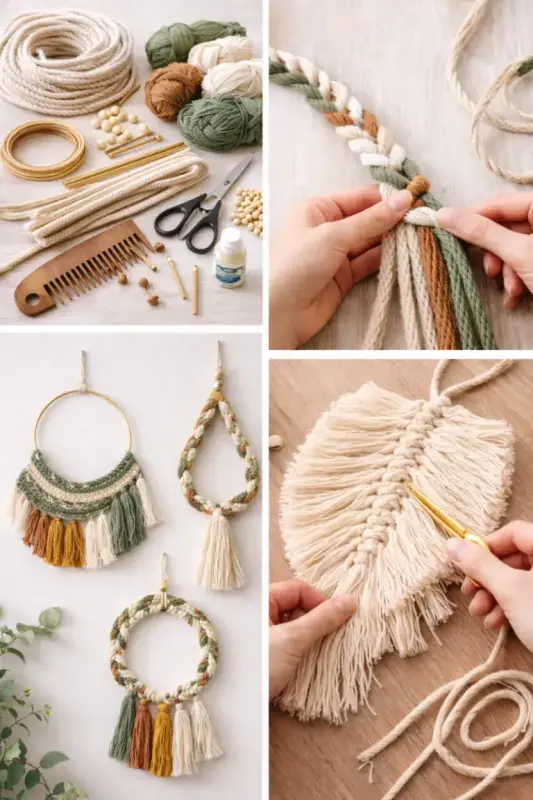
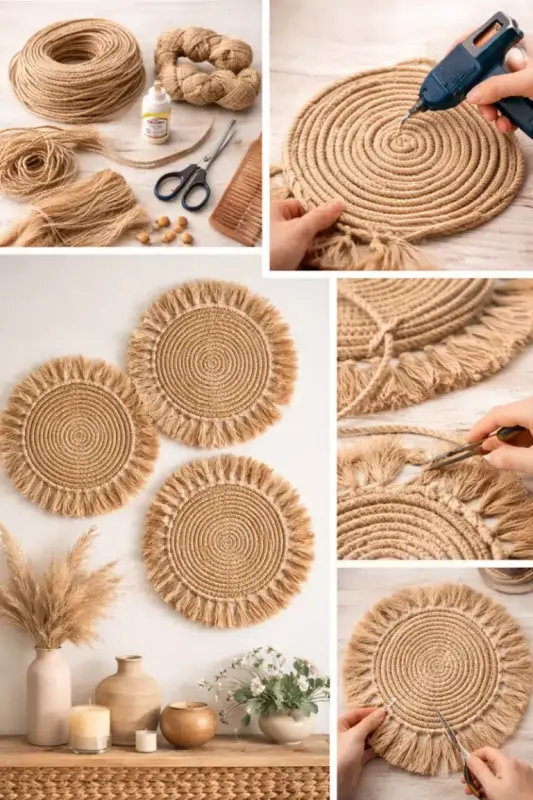
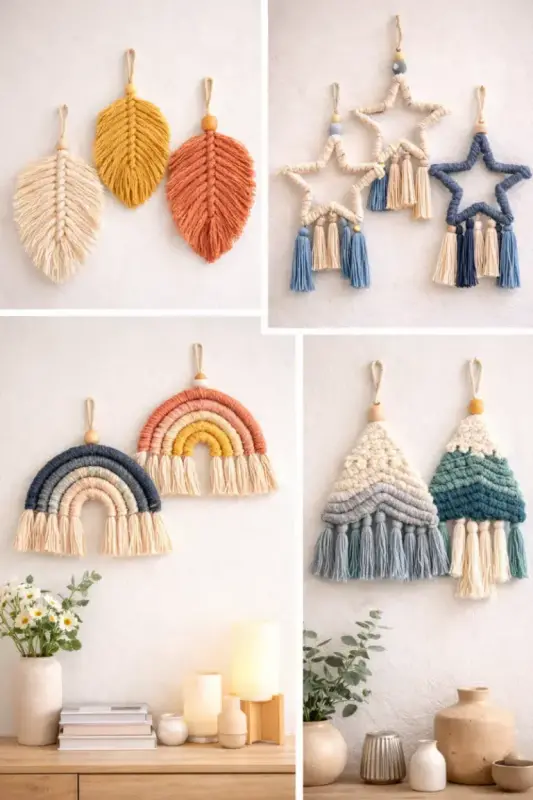
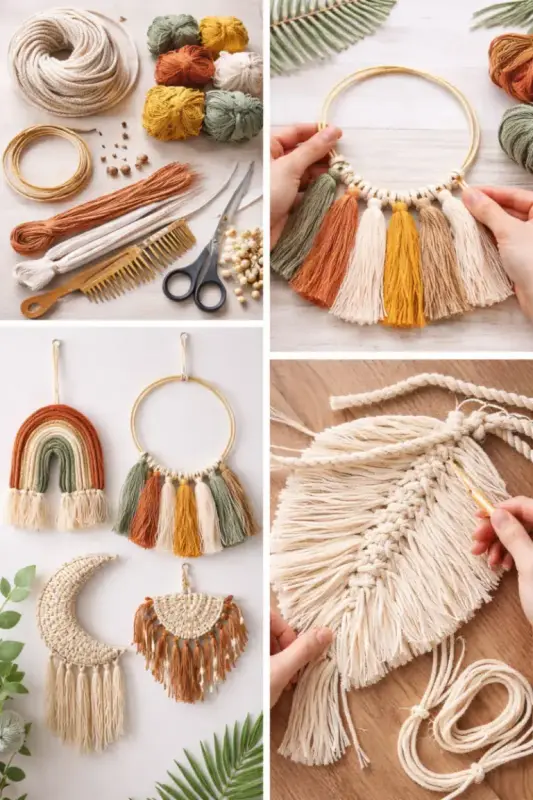
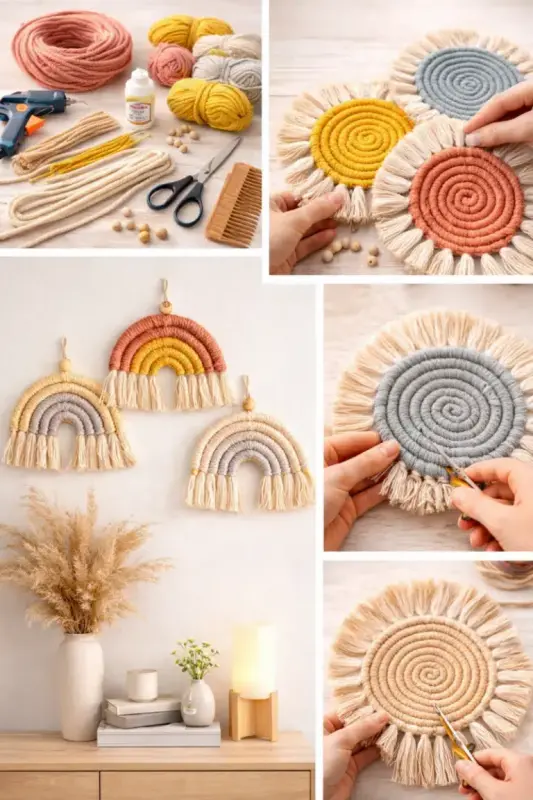
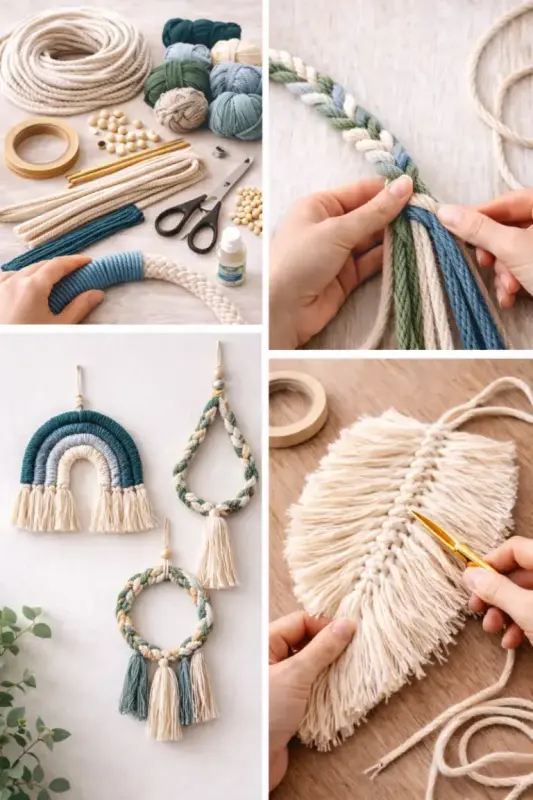
Essential Tools and Supplies for Rope and Wire Craft Projects
Having the right tools is key for your project. For rope, you'll need sharp scissors, a measuring tape, and painter’s tape. For wire, you'll need pliers, cutters, and a file to smooth ends.
Start with basic tools like a ruler, pencil, and level for straight hangs. Also, have wall hanging hardware ready, like hooks and D-rings, for the weight of your piece.
Planning Your DIY Wall Art Design Ideas: Size, Shape, and Layout
Measure the wall and sketch a few designs first. Use thicker rope or wire for big pieces and finer cord for small ones. Test the size with a paper template before cutting.
Stick to simple shapes like arcs, circles, and grids for clean designs. Repeat elements for balance. This makes your project look intentional and cohesive.
Safety Tips for Cutting, Shaping, and Hanging Wire or Rope
Cut rope on a stable surface and tape the cut end to prevent fraying. Wear eye protection when cutting wire and smooth sharp ends. This prevents injuries and damage.
Choose the right wall hanging hardware for the weight and type of your wall. Use a stud finder for heavy pieces and drywall anchors for medium ones. Before hanging, test the piece to ensure it's level.
Wall decor ideas with rope: easy rope wall hanging and beyond
Rope can quickly make a blank wall cozy. These ideas work in small apartments, busy family rooms, and quiet bedrooms. With basic knots and a steady hand, you can achieve a clean, relaxed look.
Easy Rope Wall Hanging: Simple Knots, Tassels, and Minimalist Shapes
Start by cutting several rope pieces to the same length. Fold each over a dowel and secure with a lark’s head knot. You can space them closely or leave gaps for a unique look. Trim the bottom into a V, arc, or line, and add tassels for movement.
To ensure symmetry, measure twice and mark the center. Clamp the dowel and use tape as a guide before trimming. Cut slowly, checking both sides, until the shape is right.
Even simple designs can look macramé-inspired. Try using different rope thicknesses, spacing, or a large tassel centerpiece. This style also fits well with boho decor when using neutral colors and bold lines.
Rope Wall Hanging DIY with Driftwood, Dowels, or Hoops
Begin your DIY with driftwood, a pine dowel, or a metal hoop. Wrap the top with twine for grip, then tie on rope in groups. Vary the lengths for depth, not flatness.
Hoops are perfect for small areas because they need fewer strands. Add a center wrap and let the rope fall in a half-moon shape. This keeps the look light and airy.
Color and Texture Upgrades: Dip-Dye, Paint, Beads, and Wrapped Yarn
Color can make rope look unique without complex knots. Try dip-dyeing the ends or using fabric paint for a soft fade. For texture, add wooden beads, wrap with yarn, or mix in jute.
Balance upgrades by repeating them in small doses. For example, add beads to every third bundle or wrap yarn on outer strands. This keeps the design calm and still looks like macramé.
How to Hang Rope Decor Without Damaging Walls (U.S. renter-friendly options)
Choosing the right hanging method is crucial, especially in rentals. Look for options like removable hooks, poster strips, or tension rods. For heavier pieces, use two hooks and a cord loop to distribute the weight evenly.
Before hanging, clean the wall with rubbing alcohol and let it dry. Press hooks firmly and wait for the set time. Then, test with gentle pressure. These methods help your rope decor stay up without damaging the walls.
Creative wall art with wire: homemade wire wall decor and sculpture techniques
Wire is a great choice for modern, graphic art. You can draw faces, leaves, or shapes directly on the wall. It's also perfect for custom quotes that are both light and bold.
Begin with a simple outline for homemade wire decor. Use needle-nose pliers for gripping and round-nose for smooth loops. To keep curves even, bend wire around a dowel or small bottle.
For sharp corners and clean lines, bend wire slowly and press it flat. Thicker wire holds the shape, while thinner wire adds details. This mix keeps your art looking neat and balanced.
Joins are crucial in wire art. You'll often see tight wraps or simple loops. A small dot of clear adhesive can help a loose joint without ruining the look.
To add depth, create a shallow 3D shape. Bend small spacers behind leaves or petals. Mount at two or three points to prevent twisting. This turns a flat design into a sculptural piece without heavy hardware.
For style, raw metal has an industrial feel, while matte black spray paint looks sharp and modern. Follow the spray paint label for drying time and ventilation. Pair wire with wood, canvas, or linen for a gallery look.
Plan anchor points before mounting. Use small nails or screws at multiple spots to prevent spinning. Clear bumpers protect corners from scuffs. For a light DIY piece, removable adhesive hooks work well on smooth walls.
Start with a single shape or a simple monogram. Try a set of three small geometric pieces for practice. Then, move on to larger designs with depth and bolder silhouettes.
Conclusion
DIY wall decorations with rope or wire can quickly change a room's feel, even on a tight budget. Rope adds a soft texture and a cozy, boho vibe. Wire, on the other hand, brings crisp lines and a modern, sculptural look.
When choosing between rope and wire, think about the room's mood. This will help you decide which one fits best.
Before you start, measure the wall and plan the layout with painter's tape. Use the right tools for your project. For wire, file sharp ends and ensure each hanger can hold the weight. For rope, secure knots and pick wall-safe hooks, especially in rentals.
These steps will help your DIY decor look polished and stay in place.
Adding personal touches makes handmade wall art special. Match rope color to throws or rugs, or echo metal finishes in the room. Scale is important too: a small piece might get lost on a big wall, while a large design can overwhelm a narrow space.